Category: Families

Connecting worlds–an interview with Krytyka Polityczna
Priyanka Hutschenreiter (PH): How is Krytyka Polityczna structured? What kinds of projects has Krytyka Polityczna historically worked on and what kinds of projects are you focusing on today? Agnieszka Wiśniewska (AW): Krytyka Polityczna now is a network of institutions. We have an overarching institution and inside this institution we have an online daily opinion magazine.…
Creating a creative, critical and participatory community–an interview with Gerador
Founded in 2014, Gerador houses a print and online magazine dedicated to creative journalism, produces inclusive cultural events in Portugal, and trains upcoming journalists and editors through its bespoke journalism courses. Clara Amante, head of Gerador’s Academy, explores questions of cultural funding and how EU projects are helping Gerador develop their methods of cultural and…
Building a Pan-European Community–an interview with Voxeurop
Priyanka Hutschenreiter (PH): How did Voxeurop start? What is your history? Paul Salvanes (PS): Voxeurop’s predecessor started in the 2000s. The initial name was Presseurop. It was a media project supported 100% by a European Commission grant. It was owned by a French journal named Courier International, which is quite well known in France for…
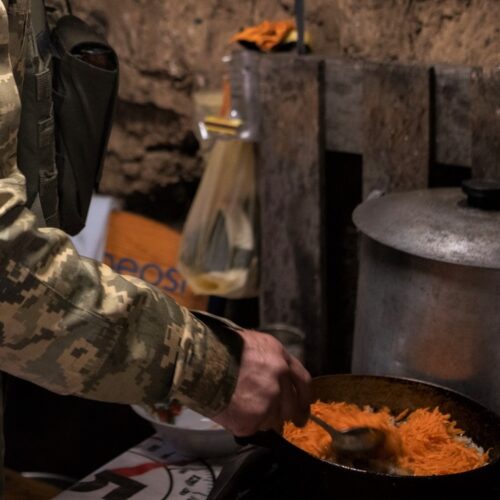
Don’t want to shoot? Load ammo or cook
Though the US has not entirely abandoned the idea of brokering a deal between Russia and Ukraine, it has become clear that the White House administration is no longer Ukraine’s ally but rather a negotiator between the two sides. Kyiv is now counting less on US military aid, looking to Europe for equipment and support.…
The resilient woman | Eurozine
I should like to begin with a poem. It is by the Portuguese poet Fernando Pessoa and is the first poem in his collection Message (Mensagem), published in 1934 – at a point when fascist movements had prevailed here and there in Europe, and a state based on this model was also emerging in Portugal:…
Reflexive self-ethnography | Eurozine
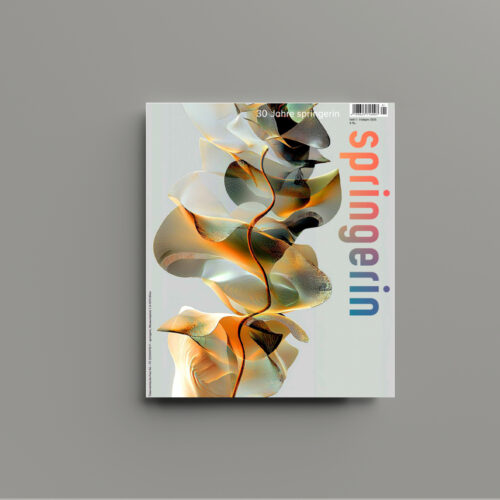
In an anniversary issue looking back on three decades of art and cultural criticism, Austrian magazine springerin brings together companions of the magazine in a ‘reflexive self-ethnography’. Artists and writers reflect on the hopes and ideals of the mid-1990s – particularly regarding the promises of the then-novel internet and its potential for critique – and…
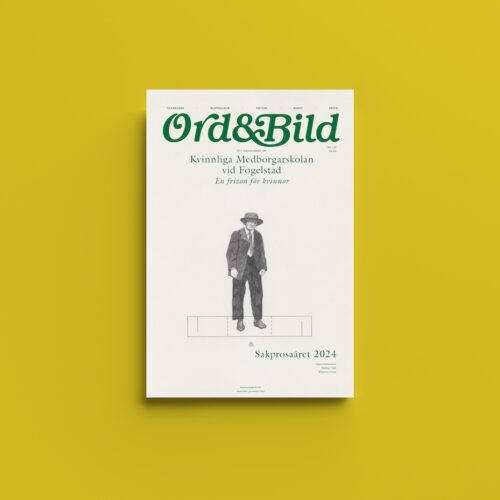
Foundry of Swedish feminism | Eurozine
When women gained the right to vote in Sweden in 1919, a group of intellectuals – including Ada Nilsson (doctor), Honorine Hermelin (pedagogue and teacher) and Elin Wägner (author) – organised a course for women in political participation at a manor house outside Stockholm. The course evolved into an education centre: the Fogelstad Citizen School…
Migration and citizenship in the twenty-first century
Tonight, I would like to talk to you about migration and identity. Perhaps the best way to start the conversation is with a presentation of myself. My name is Lea Ypi. I’m often introduced as a philosopher, as a writer, as an Albanian citizen, or as a naturalized British citizen. When I speak to women,…
The students who inspired a nation
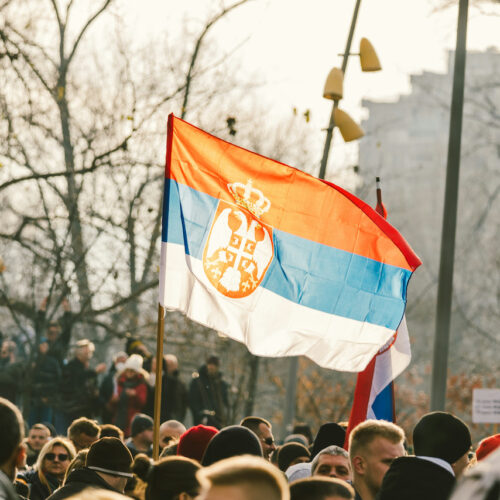
For those not too familiar with the internal affairs of Serbia, let me introduce two key players from today’s conversation: Aleksandar Vučić is a recurring character here. He has been in power in Serbia since 2012 in varying capacities, first as prime minister, later as president, and seems to have concentrated power very effectively. Vučić…
A war on its own people
In early April 2021 the Belarusian author Victor Martinovich wrote an article for the news portal Budzma, in which he poured out his anxiety about what was happening in his country. ‘Every new morning is a challenge: Are you still human? Are you still free? Everything is forbidden, even reporting the activity on the streets.…